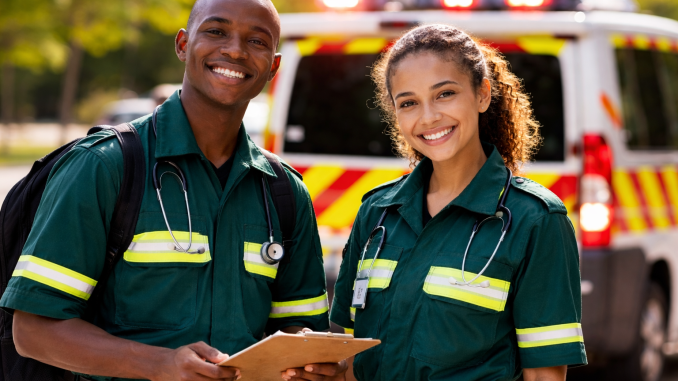
How to apply for paramedic training 2026 in South Africa is a question many school leavers and job seekers are asking as interest in emergency medical services continues to grow. Paramedic training offers a respected and rewarding healthcare career focused on saving lives, responding to emergencies, and serving communities. This complete guide explains how paramedic training works, who can apply, the requirements needed, and the correct application process for 2026.
Understanding Paramedic Training in South Africa
Paramedic training prepares individuals to provide emergency medical care in high-pressure situations. Paramedics are trained to assess patients, provide life-saving treatment, and transport patients safely to medical facilities.
Training combines:
- Classroom-based theory
- Practical skills training
- Clinical exposure in hospitals
- Fieldwork with emergency medical services
Paramedics play a critical role in South Africa’s healthcare and emergency response system.
CHECK THIS OUT: Top 10 Interview Questions for Teacher Assistants in South Africa (SAYouthMobi Guide)
Why Choose Paramedic Training in 2026?
Choosing paramedic training in 2026 is a positive step for individuals seeking a stable and meaningful career. Emergency medical services remain essential, and trained paramedics are always in demand.
Benefits of paramedic training include:
- A career focused on saving lives
- Opportunities in public and private healthcare
- Skills that are valuable nationwide
- Career growth through further qualifications
- The chance to serve communities directly
For many applicants, paramedic training represents both professional growth and personal purpose.
Types of Paramedic and Emergency Medical Care Qualifications
Before learning how to apply for paramedic training 2026 in South Africa, it is important to understand the different qualifications available.
Entry-Level Emergency Care Courses
These courses are suitable for beginners and may accept lower entry requirements. They often act as stepping stones toward advanced qualifications.
Higher Certificate in Emergency Medical Care
This qualification provides foundational emergency care skills and prepares graduates for supervised practice in emergency medical services.
Diploma in Emergency Medical Care
The diploma focuses on advanced patient care, practical training, and decision-making in emergency situations.
Bachelor of Emergency Medical Care
This degree is the highest paramedic qualification and prepares graduates for independent practice and leadership roles.
Minimum Requirements for Paramedic Training 2026
Although requirements differ by institution, most training providers require the following:
- South African citizen or permanent resident
- Minimum age of 18 years
- Grade 12 (Matric) or equivalent qualification
- English proficiency
- Physical and mental fitness
- Ability to handle stressful situations
- No serious criminal record
School Subjects Commonly Required
- Life Sciences (Biology)
- Mathematics or Mathematical Literacy
- English
Advanced programmes usually require stronger academic results.
Physical and Medical Fitness Expectations
Paramedic training is physically demanding. Applicants should be prepared for:
- Long hours
- Shift work
- Lifting patients and equipment
- Exposure to emergency scenes
Medical fitness assessments may form part of the selection process.
Skills Needed to Succeed as a Paramedic
Successful paramedics usually demonstrate:
- Strong communication skills
- Emotional resilience
- Physical stamina
- Compassion and empathy
- Ability to work in teams
- Problem-solving skills
These qualities are essential during both training and professional practice.
How to Apply for Paramedic Training 2026 in South Africa
Understanding how to apply for paramedic training 2026 in South Africa requires following the correct steps carefully.
Step 1: Choose an Accredited Training Institution
Always apply to accredited institutions to ensure your qualification is recognised. Accreditation protects students and ensures professional standards.
All applicants are advised to apply only through accredited training institutions recognised by official emergency medical education authorities in South Africa.
Step 2: Check the Entry Requirements
Each institution sets its own criteria. Confirm:
- Education level required
- Subject requirements
- Age limits
- Fitness standards
Applying without meeting requirements may reduce your chances of acceptance.
Step 3: Prepare Your Documents
Most applications require certified copies of:
- South African ID
- Latest school results or Matric certificate
- Proof of residence
- Curriculum Vitae (CV)
- ID photographs
Ensure documents are clear and up to date.
Step 4: Complete the Application Form
Applications are usually submitted:
- Online via the institution’s official website
- In person at the training provider
Fill in all information accurately and honestly.
Step 5: Attend Assessments and Interviews
Shortlisted applicants may be required to complete:
- Written assessments
- Fitness tests
- Interviews
- Medical examinations
These steps help institutions assess suitability for paramedic training.
Step 6: Receive Acceptance and Register
Successful applicants will receive an acceptance notice with:
- Registration instructions
- Training start dates
- Orientation details
Follow all instructions to secure your place.
Duration of Paramedic Training
Training duration depends on the qualification:
- Short courses: weeks to months
- Higher Certificate: approximately 1 year
- Diploma: 2 to 3 years
- Degree: up to 4 years
Most programmes include both academic study and practical training.
What You Will Learn During Paramedic Training
Training covers a wide range of subjects, including:
- Anatomy and physiology
- Trauma and medical emergencies
- Emergency patient care
- Cardiac life support
- Ambulance operations
- Ethics and professional practice
Practical exposure is a key component of paramedic education.
Career Opportunities After Paramedic Training
Graduates can work in:
DONT FORGET THIS: Nursing Training Courses for 2026 Now Open
- Ambulance services
- Hospitals and clinics
- Private emergency medical services
- Fire and rescue services
- Industrial health and safety units
- Disaster management teams
Further studies can lead to advanced roles and leadership positions.
Salary Expectations for Paramedics
Salaries vary depending on:
- Qualification level
- Experience
- Employer
- Location
Advanced qualifications and experience usually result in higher earning potential.
Important Things to Know Before Applying
Before applying, consider:
- Competition for spaces is high
- The work is physically and emotionally demanding
- Shift work is common
- Continuous training is required
Being prepared improves long-term success.
Final Thoughts on How to Apply for Paramedic Training 2026 in South Africa
Understanding how to apply for paramedic training 2026 in South Africa is the first step toward a meaningful healthcare career. By choosing accredited institutions, meeting the entry requirements, and submitting a complete application, aspiring paramedics can improve their chances of success.
Paramedic training offers purpose, stability, and the opportunity to make a real difference in people’s lives.
Disclaimer
This article is for informational purposes only. We do not offer paramedic training or recruitment services. Always apply through official and accredited training institutions.
How to Apply for Paramedic Training 2026 in South Africa | Complete Guide
How to Apply for Paramedic Training 2026 in South Africa | Complete Guide
check Another Training For Nursing
Leave a Reply